Notion · Behavioural revenue architecture
Four signals collected at signup. None used in the lifecycle.
The product team built a personalised, context-aware first session. The lifecycle email stayed the same unsegmented template. Two audits, a decision model, and three experiments that would close the gap.
- 4signals collected at signup
- 0used in the lifecycle email
- 3experiments specified
The system
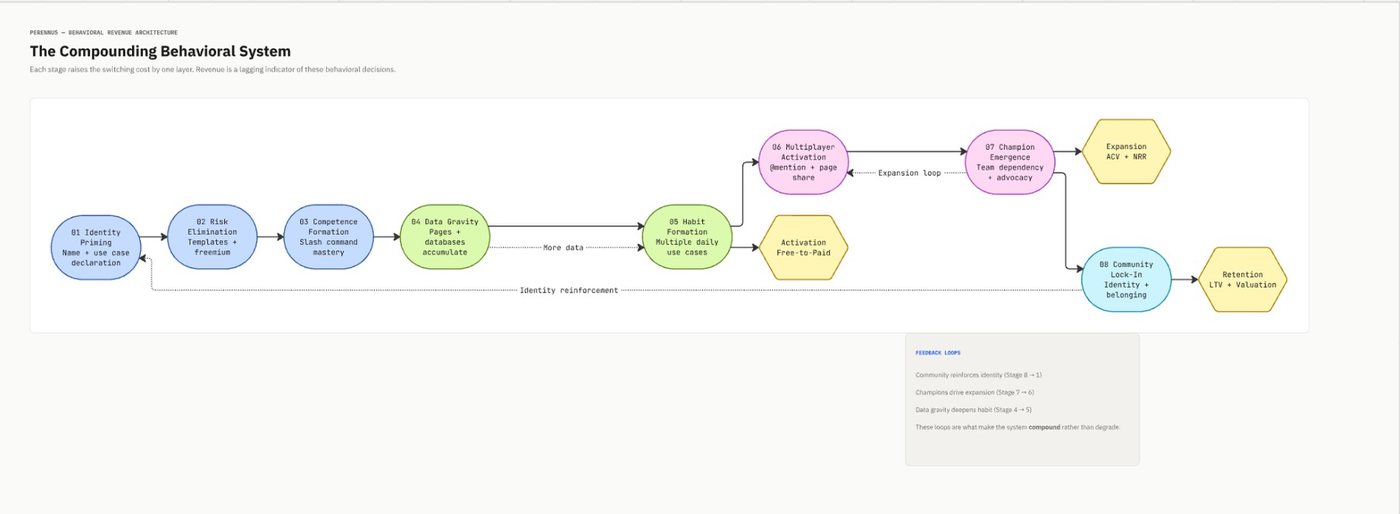
Notion built a behavioural system, not a note-taking tool.
Each layer of user investment makes the next more likely and the exit more costly: identity priming, risk elimination, competence formation, data gravity, habit formation, multiplayer, champion emergence, community lock-in. Revenue is a lagging indicator of those decisions.
Retention is not held by any single stage; it is held by the sequence.
What we found
The product deploys the signals. The lifecycle doesn’t.
- 1
Four signals collected
Onboarding asks for a name, a declared use case (work, personal, school), context and, as of June, specific intent items such as plan a trip, track my spending, keep a journal.
- 2
All four used in the product
The June welcome screen addresses the user by name, references their use case and presents intent-specific options.
- 3
None used in email
Fifteen minutes after signup, a user who had just said “I want to keep a journal” received an email promoting enterprise AI delegation workflows. No name. No use case. No intent.
- 4
The gap widened
Between February and June the product changed significantly. The lifecycle sequence did not change at all.
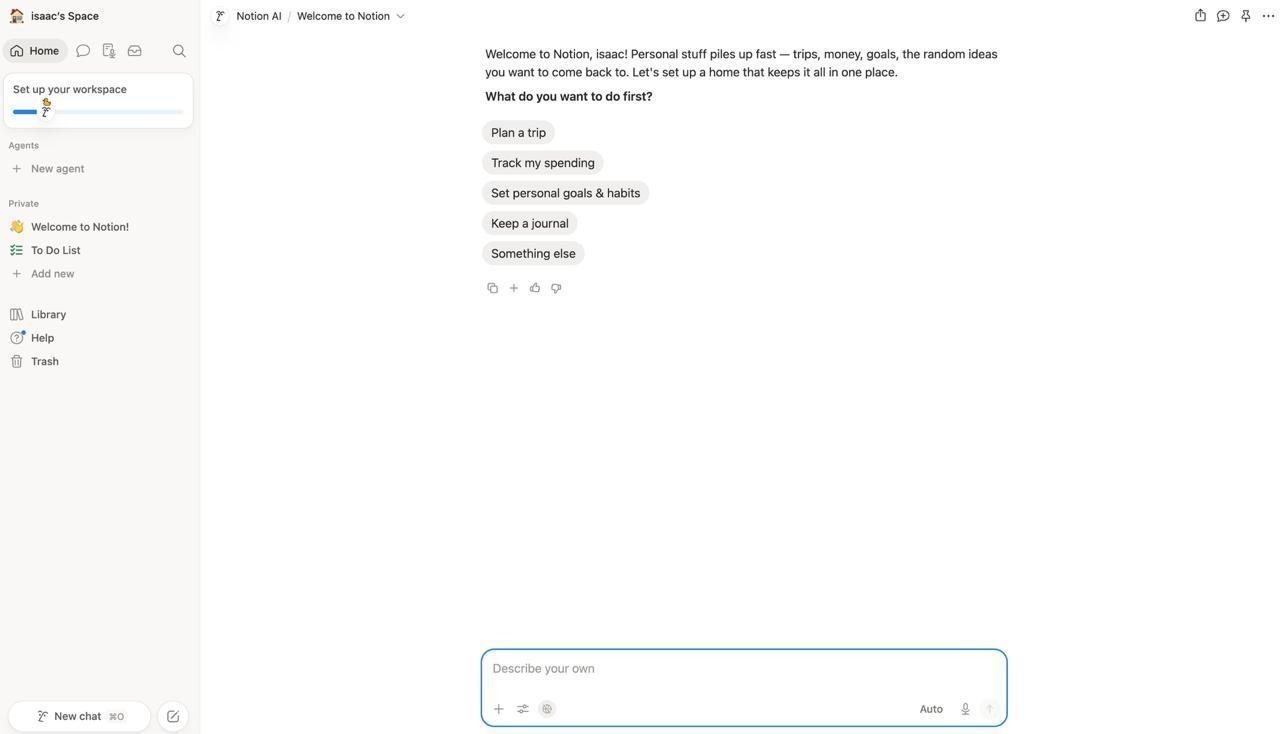
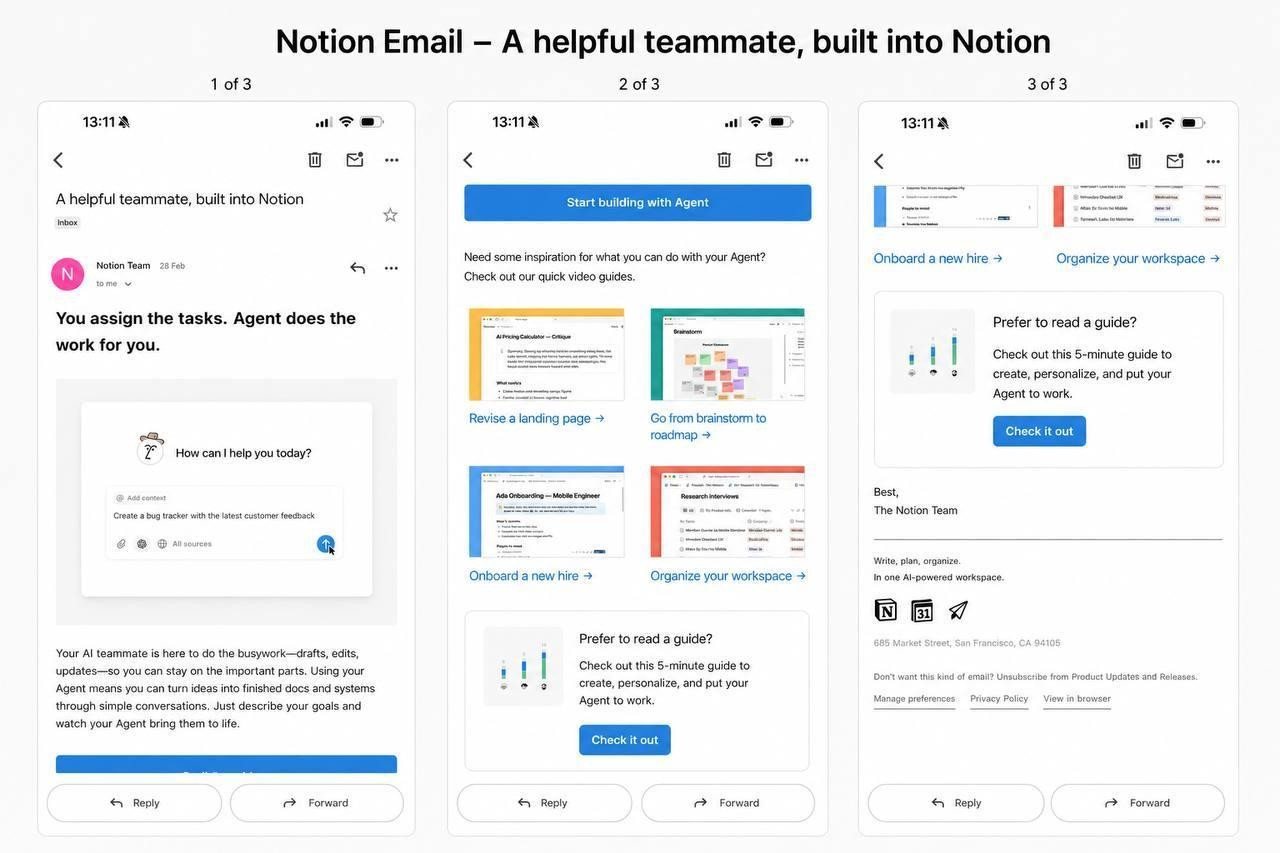
Collected versus deployed
The signals, side by side.
What we would build
A decision model, an automation and a measurement framework.
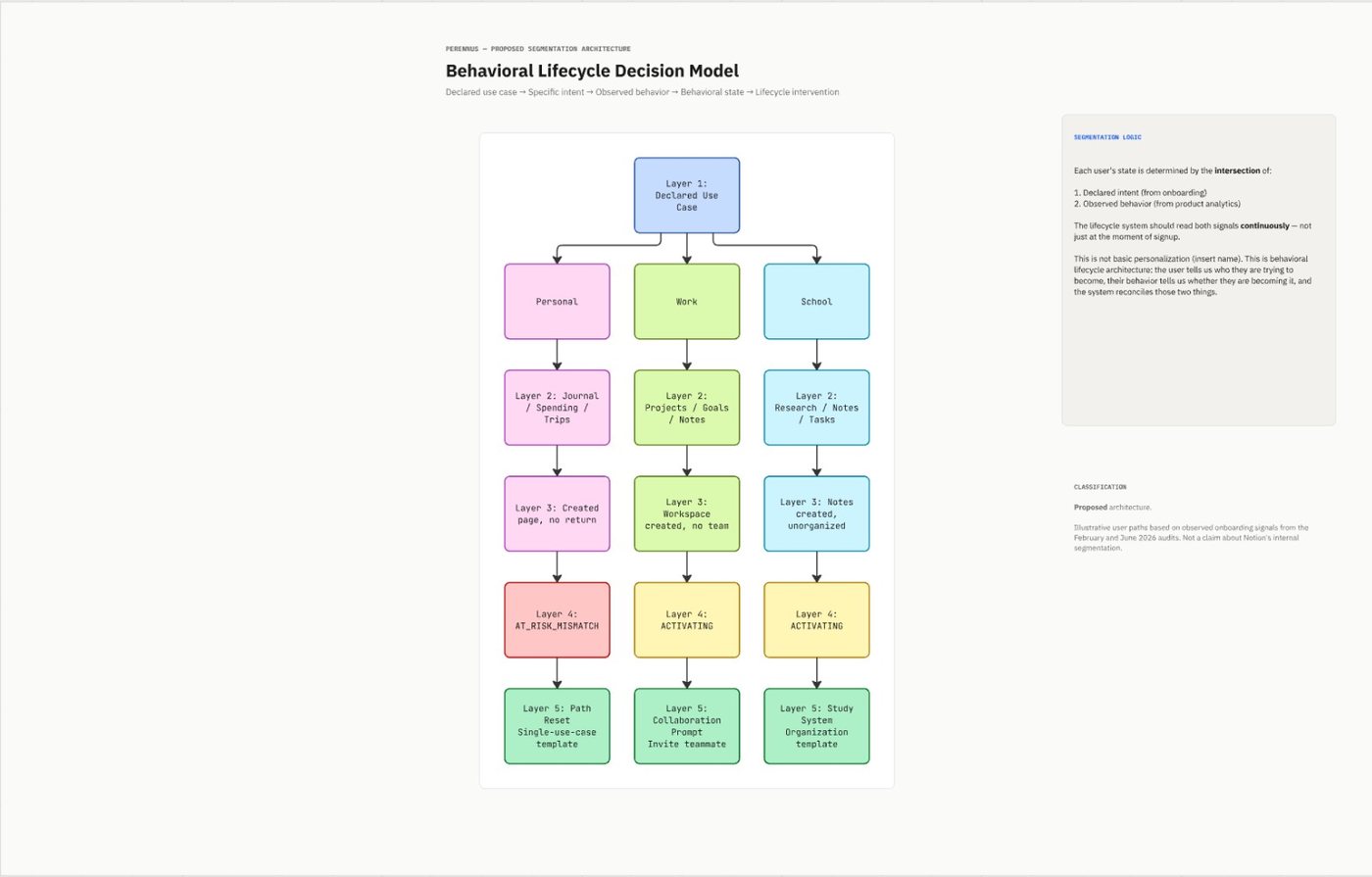
A behavioural lifecycle decision model
Declared use case → specific intent → observed behaviour → behavioural state → lifecycle intervention. A personal user who created a page and never returned resolves to at-risk and receives a path reset; a work user with no team invited receives a collaboration prompt.
An automation that observes before it sends
Onboarding context sets the initial path, a three-day observation window lets signals accumulate, and those signals, not elapsed time, choose the next intervention.
Measurement tied to commercial outcomes
Time-to-activation to free-to-paid conversion; engagement depth to churn and NRR; reduced identity-mismatch churn to gross churn; AI-first retention parity to D180 retention by cohort.
Three experiments
Each runs observation → hypothesis → intervention → measurement.
- AI-first versus manual-first cohort depth: primary metric D180 retention by cohort; guardrail that month-one activation must not degrade.
- A day-ten identity-mismatch intervention: a path reset mapped to declared intent, measured on D30 retention against control, with unsubscribes held under a 0.5% increase.
- Behavioural orchestration for new free-tier users: at most one lifecycle email per 48 hours; primary metric time from signup to the first activated-state event.
The framework defines what should be measured, not what the measurements would show.
What happened next
…led to a genuinely insightful discussion on customer lifecycles, production adoption, and AI.
More research
- Notion53pages · every email, every trigger How a product at that valuation fumbles user activation.Read the study
- Kit6questions asked · one email for everyone Six questions in. One email out.Read the study
- Chowdeck4.8orders per registered user, 2025 Ten million orders. 2.1 million users.Read the study
- Glovo35reactivation emails, plus push notifications Fourteen months of going quiet.Read the study