Realworld
They asked for five campaigns. First, we decided who owned the user.
Realworld helps adults navigate the moments nobody teaches you: housing, taxes, jobs, insurance. The brief was five campaigns and a 70,000+ audience, fast. The audit said stop.
- 78,708contacts reviewed and restructured
- 11,032exclusions and removals before a single send
- 6
from 5 briefedbehaviour-driven campaigns built
The brief
Five campaigns, a 70,000+ audience, and speed.
Realworld is backed by Bezos Expeditions and by executives from Instagram, Pinterest and Etsy. The scope: build five lifecycle campaigns, migrate and structure a 70,000+ subscriber audience in a newsletter platform, and move fast.
Before building anything, we audited the infrastructure underneath the brief. Then we stopped the build, because shipping onto that foundation would have produced numbers nobody could trust.
What we found
The campaigns weren’t the problem.
- 1
Deliverability
Gmail and Outlook were flagging sends as spam, and the sending infrastructure hadn’t been designed for long-term deliverability.
- 2
Segmentation
The existing campaigns had no segmentation logic: no definition of who should receive what, or when someone should stop.
- 3
The contact base
Unsubscribed contacts, anonymous and fake IDs, and records with no email address, none of them separated from the audience the campaigns would reach.
- 4
Ownership
Two systems were about to address one audience, with no rule saying which owned which relationship.
The ownership rule
Two systems, one audience. One rule.
The brief treated the two platforms as tools to set up. They were two owners of the same audience, and the useful question was which one owned which part of the relationship.
A subscriber who converts leaves the newsletter journey for good and enters the lifecycle flows. That single rule decided who could enter a campaign, who was suppressed, and which system a person belonged to at any moment.
The cleanup
The audience had to be defined before the campaigns existed.
- 8,204unsubscribed contacts excluded
- 1,203anonymous or fake IDs removed
- 1,625no-email contacts suppressed
- 11,032total exclusions and removals
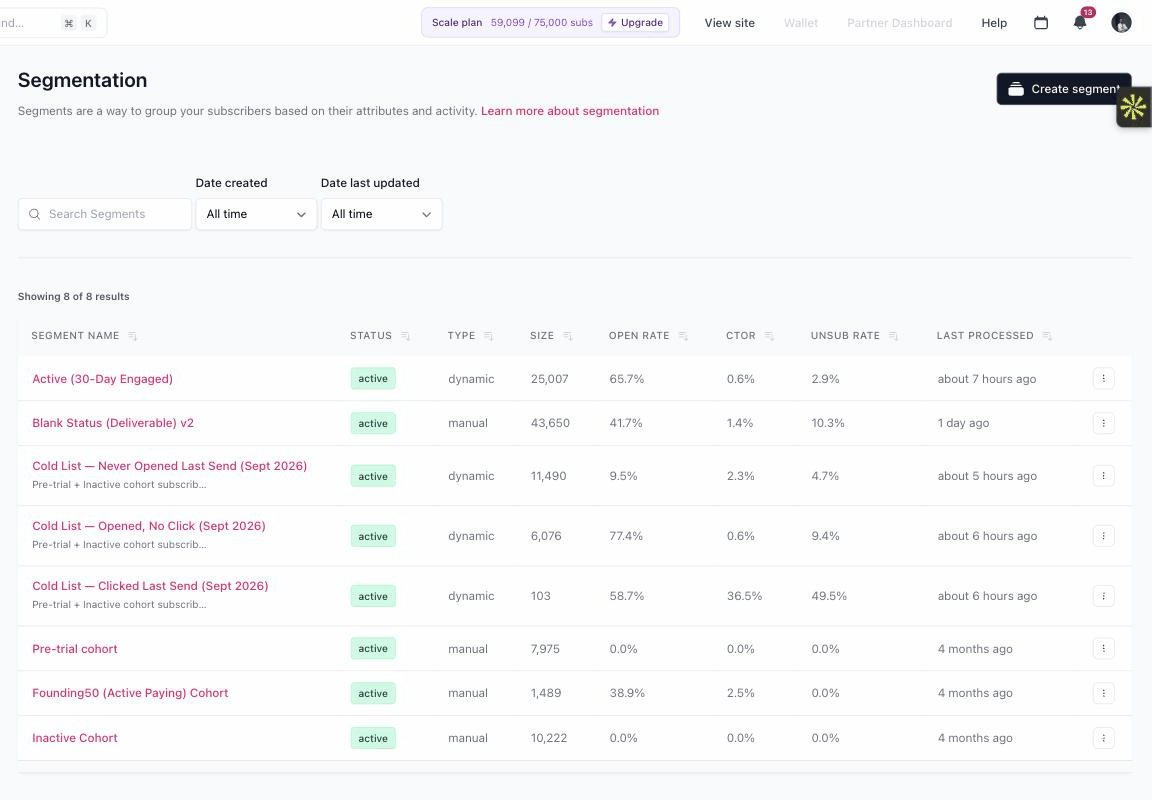
An invalid-email segment now blocks contacts with no address from entering any campaign. The remaining audience became four named cohorts, Founding Cohort, Inactive, Pre-Trial and Blank Status, the basis for a phased warmup that starts with the most engaged.
What we built
Strategy first, then six campaigns.
A lifecycle strategy, approved before build
Objectives, trigger logic, audience definitions, behavioural conditions, exit criteria and deliverability rules, reviewed and signed off first.
Deliverability in the templates
Clean HTML, plain-text compatibility, lightweight formatting, proper unsubscribe handling and a single-call-to-action architecture.
Six campaigns, one more than briefed
Onboarding, activation, re-engagement, win-back and nurture. The audit surfaced an onboarding gap, so the build grew from five campaigns to six.
What the system showed next
Reading the system the campaigns now sat inside.
- 1
The product emitted more than the lifecycle used
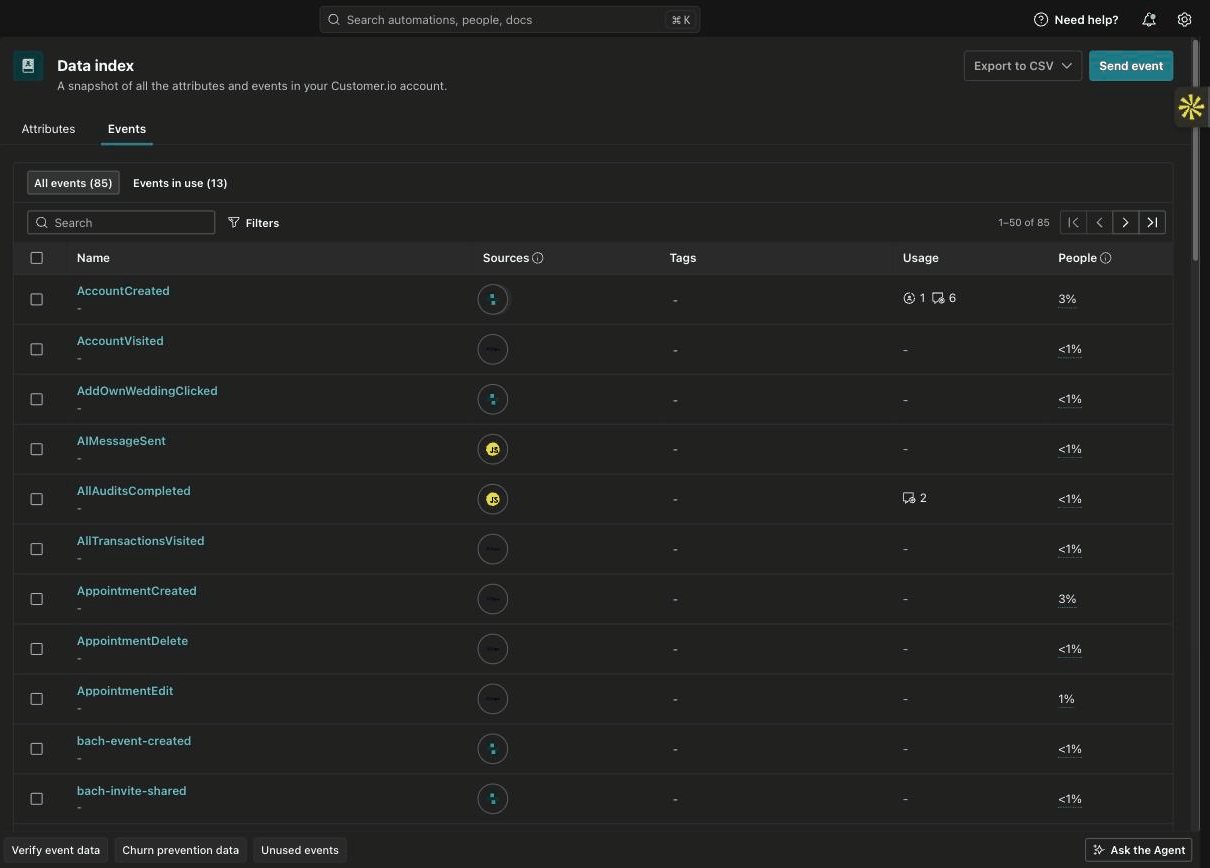
85 product events were available; 13 were used by lifecycle automation. Higher-stage events like LessonCompleted and TaskCompleted drove nothing.
- 2
The audience rule decided the outcome
The same newsletter, a week apart. Behaviourally constrained: 189 sent, 0.0% failed. Sent to everyone subscribed: 5,294 sent, 36.9% failed.
- 3
Sender requirements weren’t the gap
Every Gmail authentication and configuration requirement read Compliant. The one marked “Needs work” was user-reported spam rate.
Isaac was prompt, professional, and thoughtful. I would absolutely work with him again.
 Genevieve BellaireFounder, RealworldRated 5.0 / 5.0 · Realworld hired us again six days later.
The takeaway
Sometimes the highest-value work isn’t executing the brief. It’s finding the problem underneath it, before the build makes it invisible.
More case studies
- 60.2%of onboarding recipients reached activation, from 13.3% AI companion subscription app Every report said “delivered”. Gmail disagreed. Read the case study
- 1 → 4one intake, four outcome paths Aviation mental health practice An assessment that decides what happens next, and escalates when it matters. Read the case study
- 2lead funnels, split by intent Simplicity & Productivity Co. Leads were arriving. Nothing was carrying them to a purchase. Read the case study